An annual international day · 24 November 2026 · First edition
AI Free Day

Your own thinking first. Then AI.
What if we managed without AI for a day? On 24 November, let's try it: for one day, no generative AI. Let's see when we really need it, and when we reach for it simply out of habit.
The idea
One day without AI. See what changes.
More and more often we ask artificial intelligence to write something for us, suggest something or help us decide. That is convenient. But is it always necessary?
AI Free Day is a one-day experiment. It reminds us that technology is there to strengthen our thinking, while people keep the initiative, the judgement and the decision.
The name says free because this is about freedom: from the reflex that hands us a ready-made answer before we have asked ourselves the question. For one day, let's try to manage on our own first.
The next day we go back to the technology. Perhaps with a slightly different approach.
The rule
For one day, we set AI aside.
From midnight to midnight on 24 November, local time, we set generative AI tools aside: chatbots, assistants and features that write, summarise, suggest or choose for us. We think, write, calculate and decide for ourselves.
A simple test: does the tool create text, an image, an answer or a recommendation for me? If so, I set it aside for the day.
Set aside for 24 hours
- AI chat assistants and GenAI chatbots
- text, image, audio, video and code generators
- "write", "summarise" and "suggest a reply" features in email, office suites, messaging apps and phones
- generative answers in search engines: scroll down to the classic results and choose your sources yourself
Keep as usual
- classic search, maps and navigation
- dictionaries, spell-check, calculators and spreadsheets with formulas
- protection: spam filters and fraud prevention
- assistive and health technologies, always
AI Free Day is about choice, and need always comes first.
Grey areas are your call. That is part of the experiment too: noticing where your own line runs.
Does your job require GenAI that day? Choose the task version: start one important task, one meeting or one decision with your own thinking.
The experiment
Three steps
1. When do you reach for AI?
Each time you want to reach for AI, pause for a second. Write down which task it was.
2. What do you actually need it for?
Are you looking for information, a second opinion, help organising your ideas, a ready-made answer? Or do you want the tool to decide what the problem is?
3. Check what AI would have done.
On 25 November, go back to AI with the same task and set its answer against your own line of thinking. What do you see differently? What do you want to keep for yourself?
Perhaps after this day you will use AI a little differently. For example like this: first I work out what I need, then I decide what AI should help me with, and the final say stays with me.
The date
Why 24 November?
24 hours. The date echoes the rule: one full day for your own thinking.
Just before Black Friday. The season of intense shopping, comparing offers and hunting for gifts begins, and AI increasingly takes part in those choices. In 2026, AI Free Day falls three days before Black Friday.
One month before Christmas. A good moment to take a step back and look at our own decisions, including what we buy.
Evolution Day. On 24 November 1859, Charles Darwin published On the Origin of Species. A fitting date to look at how our own way of thinking is changing.
Shopping is just one example. The same mechanism shapes work, learning, communication and creativity.
Take part
How to join
Every person and organisation tells the story of their participation in their own way.
You
Set GenAI aside for 24 hours and follow the three steps of the experiment. Share what you learned with #AIFreeDay.
Companies and teams
Invite your team to the experiment. Pick one meeting, project or decision that you will start with your own thinking, and the next day compare the result with what AI suggests. It is a practical lesson in a principle where people think, decide and take responsibility.
Schools and universities
Dedicate the day to independent thinking, fact-checking and creativity. Ready-to-use lesson topics are below.
Media
If you want to write about us, have a look further down: there is a short description of the day, a logo to download and a contact.
For schools
A day of independent thinking at school
A proposal for teachers of every subject. Each lesson on 24 November can focus on one of the topics below. Adapt them to your students' age and subject.
1. Question before answer. Students formulate questions about a problem before they look for answers. A good question is half the solution.
2. Check before you believe. Verifying information, sources and images. How to spot fake news and how to decide whom to trust.
3. An idea from scratch. A creative task without prompts: a story, a design, an invention, a poster.
4. Who decides? A discussion of where algorithms help, for example in search results and recommendations, and where the decision belongs to a person.
5. Solve it your way. One maths or science problem, two ways of solving it, and a comparison of the reasoning.
6. Writing from the first sentence. A text written independently, without autocomplete. A conversation about how a personal style develops.
7. Debate. Arguments for and against, built by students themselves, with an assessment of sources.
8. Tomorrow we compare. On 25 November, the same task with the help of AI, followed by a discussion: what did AI add, what did it leave out, whose conclusion is more accurate and why.
Identity
Designed by a human
Before asking AI to do it, we asked a person.
The AI Free Day visual identity was designed by Joanna Balasińska, without an image generator: with her own idea, her own decisions and responsibility for the result. It is a conscious choice in line with the spirit of the day: your own thinking first, then AI.
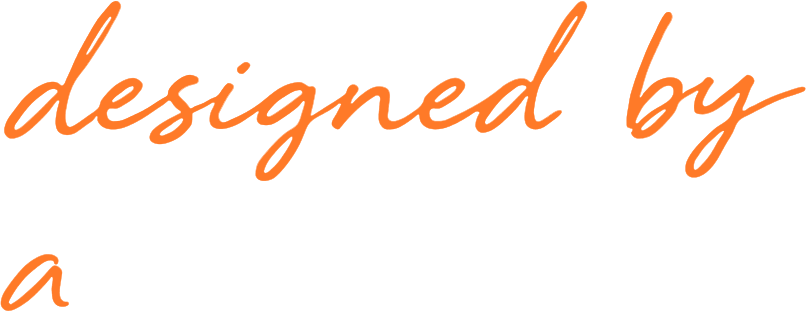
The “designed by a HUMAN” mark
Use it to mark work that a human conceived and made. The mark is your own declaration as the author.
designed by a HUMAN
Graphic design, illustration, layout.
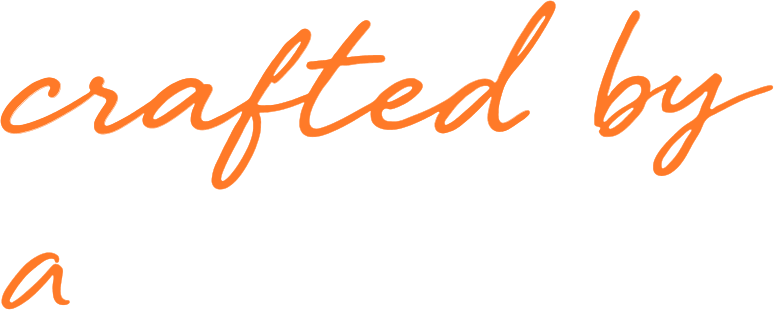
crafted by a HUMAN
Something made by hand, craft.
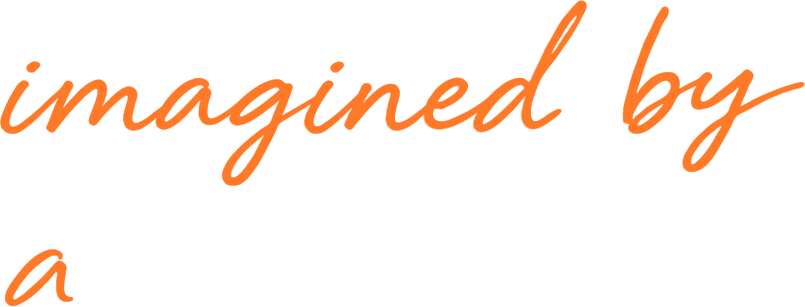
imagined by a HUMAN
An idea, a concept, a script.
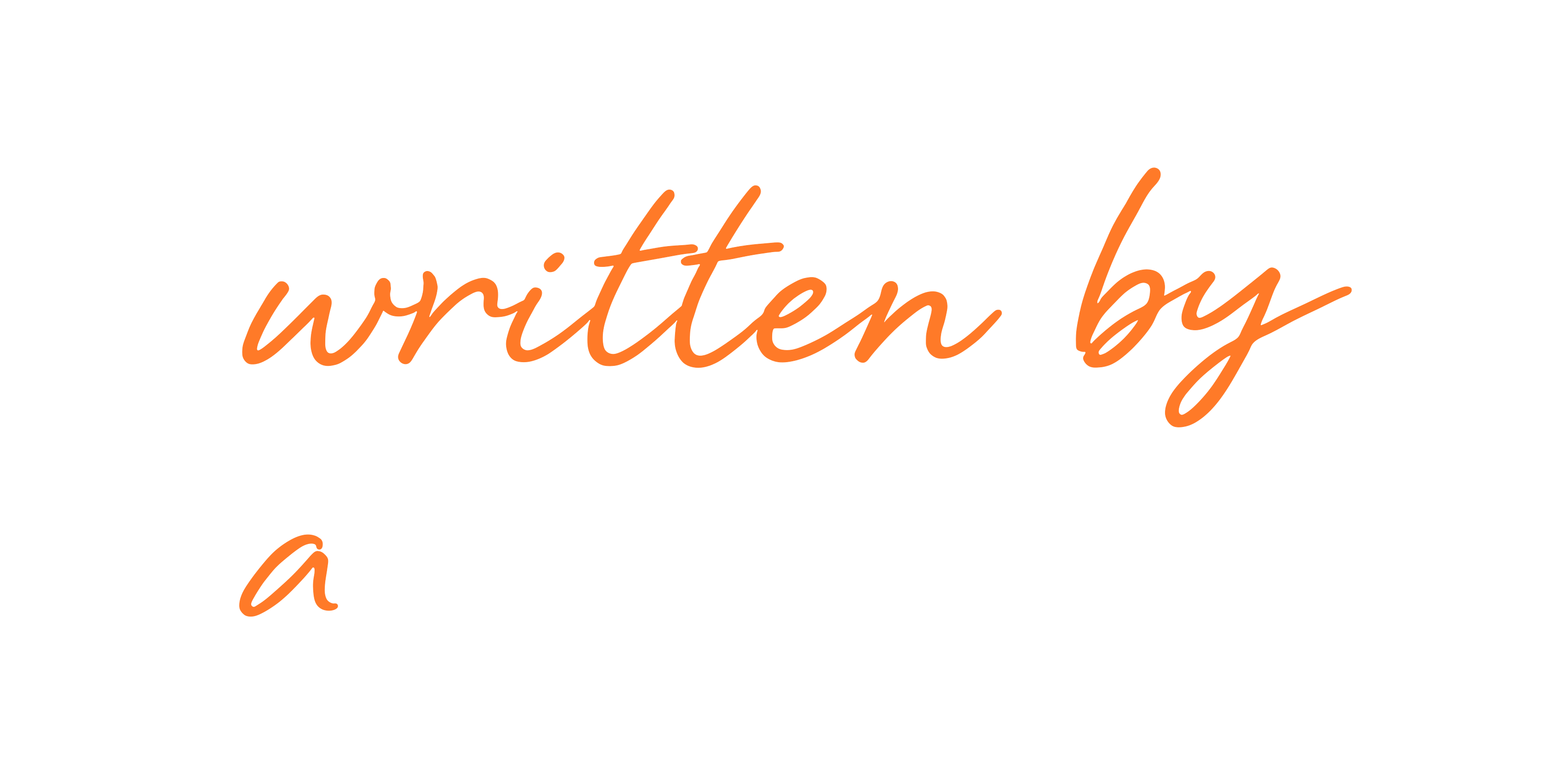
written by a HUMAN
Text, an article, a post.








When to use it
- The stage the variant names was done without generative AI. Example: “written by a HUMAN” on a text that no language model wrote or rewrote.
- Tools that create nothing on your behalf are fine: a spell checker, a camera, design software without generative features.
- If AI helped at another stage, choose the variant only for the stage a human did.
How to use it
- On light backgrounds use the black or black-and-orange version, on dark backgrounds the white or white-and-orange one. Do not change the colours, proportions or wording.
- Place it next to the work it refers to, not as a mark for a whole website or company.
- Do not combine it with other organisations’ logos.
The evidence
What is the idea based on?
How we use AI matters.
A study of 589 university students and early-career workers (Frontiers in Psychology, July 2026) distinguishes two ways of working with GenAI: AI as support for your own thinking, and AI leading the reasoning process. Both brought a similar sense of saving time and effort. When AI led the process, participants more often handed it the decision about what mattered and what to conclude, felt less motivated to think problems through themselves, and rated their own capacity for independent judgement lower. Using AI as support went hand in hand with higher motivation.
AI takes part in everyday choices.
In a Polish survey, 61% of respondents had used AI when planning or making purchase decisions in the previous six months (SW Research for On Board Think Kong, April 2026, N = 830, CAWI).
Limits of interpretation. The study relies on participants' self-reports and describes associations, leaving the question of cause open. That is exactly why AI Free Day is an experiment: everyone can test on themselves how much of their thinking they keep.
Sources
- Zhu Q., Li X., Dong Y., Chang P., Fan M. Not all cognitive offloading is equal: distinguishing dependent and autonomous offloading to generative AI. Frontiers in Psychology, 17, 16 July 2026. https://www.frontiersin.org/journals/psychology/articles/10.3389/fpsyg.2026.1878629/full
- On Board Think Kong, SW Research. Zakupy z AI (Shopping with AI). CAWI, April 2026, N = 830 Polish adults. https://obtk.pl/wp-content/uploads/2026/05/OBTK_zakupy_AI_06_26.pdf
For media
AI Free Day in one sentence
On 24 November we set GenAI aside for 24 hours to find out whether AI is helping us think or starting to think for us.
AI suggests what we should write and, more and more often, what we should buy. A fast answer hides one thing, though: whether AI is helping us think or starting to think for us. That is why on 24 November we are setting GenAI aside for 24 hours. Your own thinking first. Then AI.
AI answers faster and faster. But do we still pause before we ask the question? On 24 November we set GenAI aside for 24 hours and see how many decisions we start with our own thinking.
Media contact
AI Free Day communications and media relations are handled by Brand Semantics.
Michał GrzebykBrand Semanticsmichal@brandsemantics.eu+48 782 010 316AI Free Day logo
Eight versions: black, white, black and orange, white and orange, each on a transparent or solid background. SVG and PNG files.
Organiser
Who is behind AI Free Day?
AI Free Day was initiated and is organised by the AI Business Center Foundation (opens in a new window). The Foundation is a think tank and advisory partner that helps organisations adopt artificial intelligence. It builds awareness of human-in-the-loop: the principle that the human decision comes first.
In practice, this means a clear division of roles: AI prepares, compares and suggests, while people judge, decide and answer for the result. AI Free Day lets everyone test this on themselves. For one day, you see which decisions you make yourself and which you hand over to a tool out of habit.
Questions
Frequently asked questions
Is AI Free Day a campaign against AI?
No. It is a campaign for conscious use of AI. A one-day pause shows where technology supports our thinking and where it takes over. On 25 November we return to our tools with more control.
What exactly do I set aside?
Tools that create text, an image, an answer or a recommendation for you. The "set aside / keep" list is in the Rule section.
My job requires AI. Can I still join?
Yes. Choose the task version: start one important task, meeting or decision with your own thinking, and the next day compare the result with what AI suggests.
How much does it cost to take part?
Taking part is free of charge and needs no registration.
How can an organisation show that it is taking part?
Talk about your participation in your own channels with #AIFreeDay.
What about assistive technologies?
They always stay. Screen readers, live captions and other technologies that people rely on every day are outside the rule.
Will AI Free Day happen every year?
Yes. AI Free Day is an annual international day, held on 24 November.